
Industrial & Mechanical
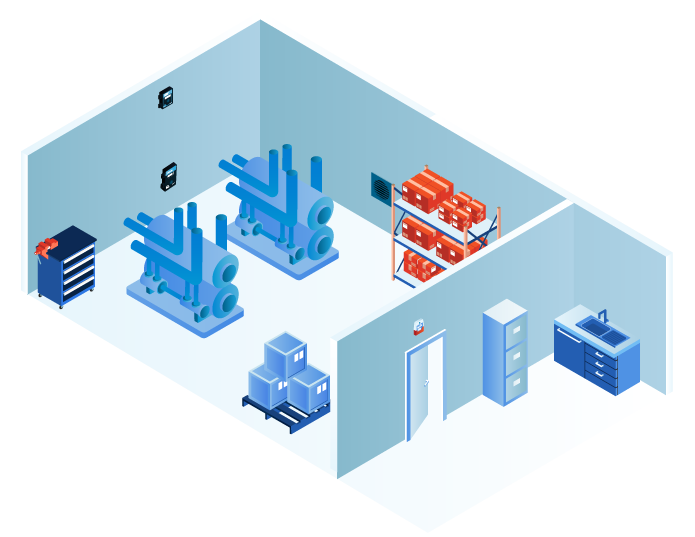
Industrial and mechanical spaces house critical building infrastructure that can present multiple gas hazards. Boiler rooms may accumulate natural gas or propane leaks. Generator rooms require ventilation for exhaust gases. Mechanical plants with chillers need refrigerant leak detection. CET provides integrated solutions that address all these hazards with reliable, code-compliant detection systems.
Why Gas Detection Matters
Mechanical rooms often contain multiple potential gas sources in confined spaces with limited natural ventilation. A single refrigerant leak can displace oxygen to dangerous levels. Combustible gas accumulation creates explosion risks. These spaces are frequently unmanned, making continuous automated monitoring essential. Early detection enables evacuation and prevents catastrophic equipment failures.
Common Hazards:
Applications
Explore industrial & mechanical applications
Wastewater Treatment
Hydrogen sulfide, methane, and oxygen monitoring for pump stations, digesters, and enclosed treatment areas
Boiler Rooms
Continuous monitoring of natural gas, CO, and CO2 in schools & boiler rooms ensures the safety of students and faculty.
Welding Shops
Combustible gas, oxygen, and fume detection for fabrication facilities and metal working environments
Warehouses
Monitoring levels of CO & NO₂ is necessary to ensure the health and safety of warehouse employees.
Waste & Recycling
Methane, hydrogen sulfide, and combustible gas monitoring for material recovery facilities and waste processing plants
Regulations & Standards
OSHA boiler room hazards 29 CFR 1910.261 and 1926.29, NFPA 54 and 84 National Fuel Gas Code, ASHRAE 15 refrigerant safety, ASHRAE 34 refrigerant classification, IMC mechanical room ventilation requirements, ASME CSD‑1 emergency shutdown switch.
In addition to these national codes, many states, provinces, and municipalities adopt their own amendments or standalone requirements.
Target Gases
Gases commonly monitored in industrial & mechanical applications