Healthcare & Education
Healthcare and educational facilities present unique gas detection challenges with diverse hazard sources. Hospital operating rooms use anesthetic gases. Research laboratories work with various chemical vapors. Campus buildings may have older mechanical systems with refrigerant leak potential. CET provides detection solutions that integrate with building automation and meet the stringent requirements of these critical facilities.
Why Gas Detection Matters
Healthcare facilities serve patients whose medical conditions may make them more vulnerable to gas exposure. Chronic exposure to waste anesthetic gases affects medical staff. Laboratory personnel work with chemicals that require immediate detection and alarm. Educational facilities have occupancy patterns and populations that require robust safety systems. Regulatory compliance and accreditation standards mandate proper monitoring.
Common Hazards:
Applications
Explore healthcare & education applications
Schools
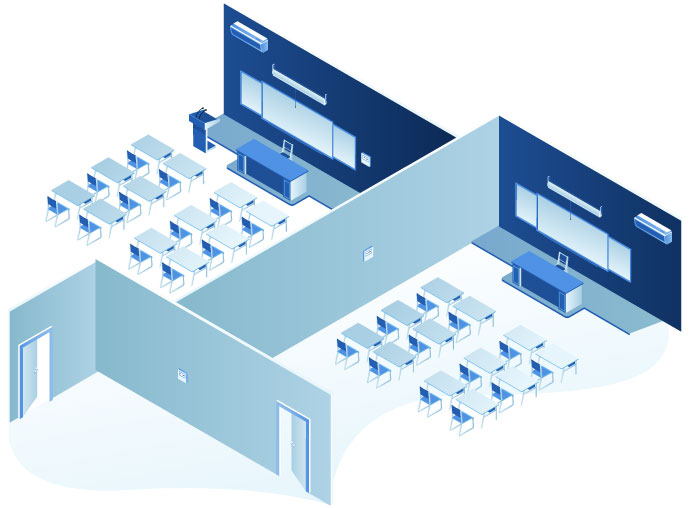
Continuous monitoring of carbon monoxide, carbon dioxide, natural gas, and nitrogen dioxide protects students and staff across school facilities - from boiler rooms and science labs to bus loading areas and cafeteria kitchens.
Hospitals
Continuous monitoring for oxygen deficiency levels in hospitals and labs with a fixed gas detection system ensures the safety of patients and staff.
MRI Rooms
Continuous monitoring of oxygen levels in areas where compressed gases or cryogenic liquids such as nitrogen, helium, and occasionally carbon dioxide are used, including MRI suites, NMR rooms, and cryogenic equipment spaces, to detect and prevent oxygen deficient atmospheres.
Indoor Air Quality
Carbon monoxide, CO2 and TVOC monitoring for classrooms, offices, and public assembly spaces to optimize both air quality and energy efficiency.
Laboratories
Continuous monitoring protects laboratory personnel from combustible gases, oxygen displacement, and hazardous toxic gas exposure in laboratory settings and research facilities.
Regulations & Standards
OSHA anesthetic gas guidelines, ASHRAE 170 healthcare ventilation, NFPA 99 Health Care Facilities Code, Joint Commission accreditation requirements, AIHA laboratory ventilation guidelines.
In addition to these national codes, many states, provinces, and municipalities adopt their own amendments or standalone requirements.