
Gas Detection for MRI Rooms
Continuous monitoring for oxygen depletion and helium leak detection in MRI suites and cryogenic equipment areas for early warning and safe evacuation.
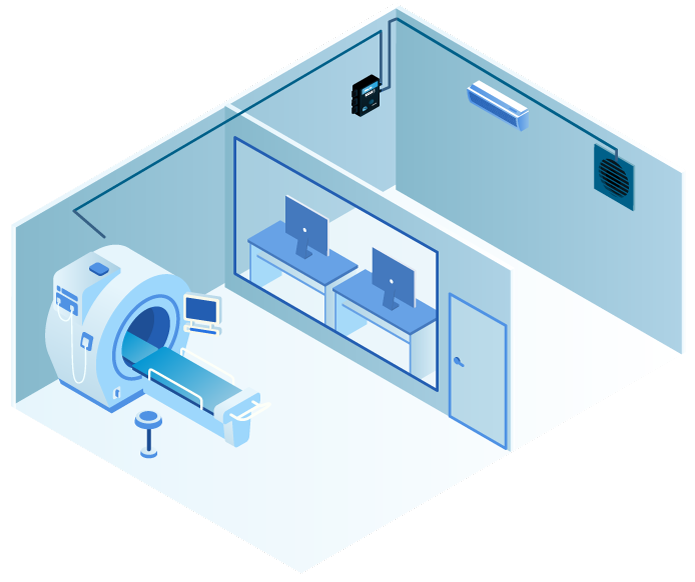
Typical MRI Rooms System
Target Gases
Gases monitored in this application
Why Gas Detection is Required
Magnetic Resonance Imaging (MRI) systems use powerful magnetic fields to create detailed internal images, while Nuclear Magnetic Resonance (NMR) spectroscopy analyzes materials at the atomic level. Both rely on compressed gases and cryogenic liquids, typically nitrogen, helium, or carbon dioxide, to cool superconducting magnets and move samples, and a leak of these gases can rapidly displace oxygen in the room. Because patients on the MRI table cannot evacuate quickly and staff may be focused on patient care rather than atmospheric changes, continuous oxygen monitoring is essential for early warning and safe evacuation. The ACR Manual on MR Safety reinforces this need by outlining strict safety practices, including controlled‑access safety zones and rigorous screening procedures to prevent accidents in MRI environments. It emphasizes structured oversight through designated safety roles and clear protocols for managing magnetic‑field hazards, all of which support the broader requirement for environmental monitoring, such as oxygen‑depletion detection, to keep both patients and staff safe.
System Architecture
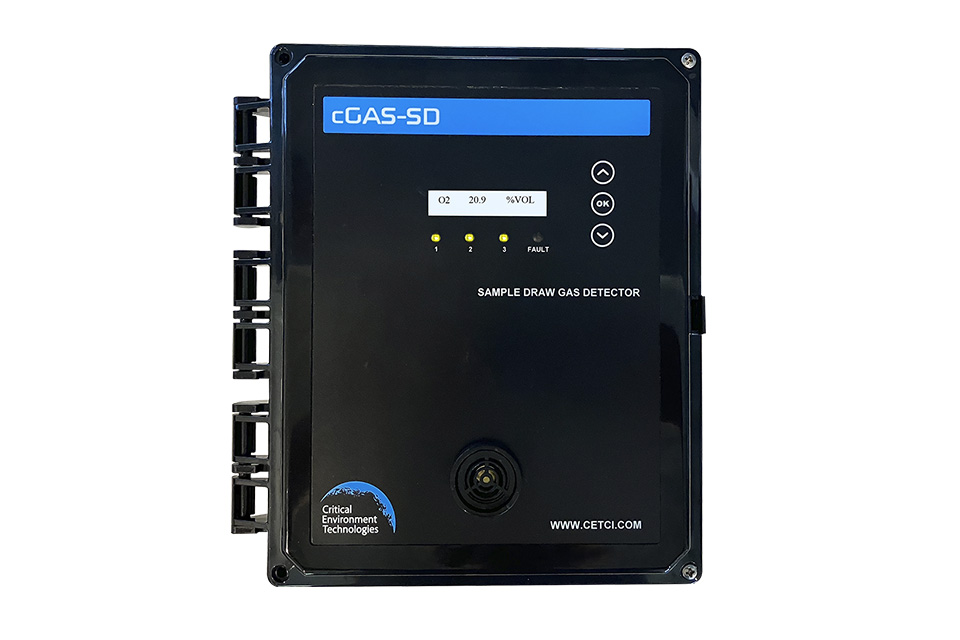
A complete MRI room oxygen monitor gas detection system typically consists of an oxygen sample draw system installed outside the room with a tube running into the room. It uses the tubing to draw sample air from the monitored space into the gas detection unit. This tubing should be placed strategically in areas where gas leaks are most likely to occur, ensuring accurate sampling. Air is continuously pulled through the tubing by a sample draw pump, passed over the sensor inside the sample draw enclosure, and then exhausted through an outlet port. The controller monitors oxygen levels continuously and activates alarms both inside and outside the room when levels drop, enabling immediate evacuation. Alarm outputs activate audible/visual notification devices inside and outside the MRI suite, trigger emergency exhaust ventilation, and can interface with building systems for coordinated response.
Key Considerations
Important factors for planning your system
Oxygen sensors should be mounted at breathing height and near the magnet where helium first accumulates
Audible and visual alarms both inside and outside the suite ensure all personnel are notified
Emergency exhaust ventilation should activate automatically on low oxygen alarm
Additional Information
If the inlet tube becomes blocked and/or the filter becomes dirty, the display will show "Flow Alarm" and the Channel 2 LED will turn red, the buzzer will sound and the pump will shut off. After the blockage has been removed / the dirty filter replaced, press the OK push-button to stop the buzzer, restart the pump and clear the latching. Helium is lighter than air and rises, but rapidly cools room air causing convection patterns that can affect oxygen levels throughout the space. Multi-point oxygen sensing provides more reliable detection than a single sensor. Consider helium-specific sensors in addition to oxygen monitoring for earlier leak detection.
Build Your Gas Detection Expertise
Explore upcoming webinars and personalized training from CET experts, covering gas detection technology, application guidance, installation, and commissioning.
Related Products
Downloads
cGas-SD Sample Draw System Brochure
Brochure
Application: MRI Rooms - CGAS-SD-O2
Application_guide