
Parking & Vehicle Exhaust
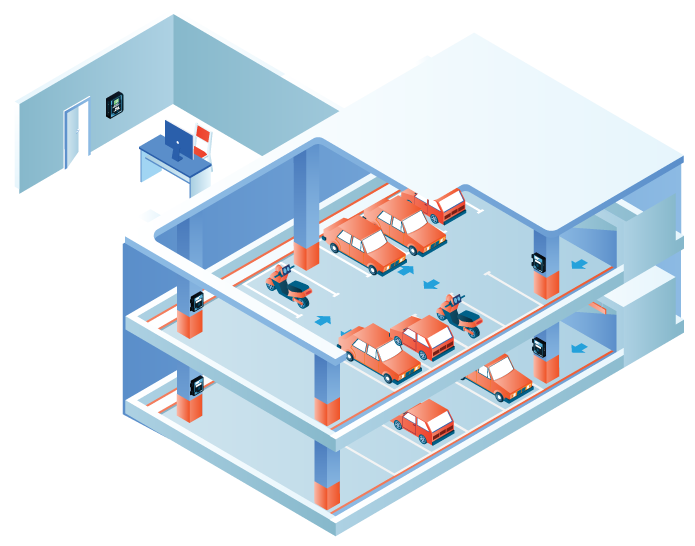
Modern facilities depend on advanced vehicle exhaust monitoring to maintain safe air quality while significantly reducing energy use. Demand‑controlled ventilation (DCV) is the primary value driver, allowing parking garages, service bays, loading docks, and transit facilities to cut ventilation energy consumption by up to 90%. A complete parking garage gas detection system typically monitors carbon monoxide (CO) from gasoline engines and nitrogen dioxide (NO₂) from diesel exhaust, activating ventilation only when needed. Facilities that accommodate alternative‑fuel vehicles may also require propane or methane detection, since unburned fuel leaks from CNG, LNG, or propane‑powered fleets create combustible‑gas hazards that traditional CO/NO₂ sensors cannot detect.
Why Gas Detection Matters
Vehicle exhaust contains toxic and combustible gases that can accumulate quickly in enclosed or semi‑enclosed spaces, posing risks to occupants, workers, and equipment. CO and NO₂ exposure can lead to acute health effects, while propane or methane leaks from alternative‑fuel vehicles introduce explosion hazards. Effective gas detection ensures safe air quality, supports garage CO detector and NO₂ monitoring strategies, and enables DCV systems to reduce energy use without compromising safety. Compliance with the International Mechanical Code (IMC) and ASHRAE standards further requires proper sensor placement, automatic fan control, and integrated alarm systems, making gas detection essential for protecting people and maintaining regulatory compliance across all vehicle‑related facilities.
Common Hazards:
Applications
Explore parking & vehicle exhaust applications
Warehouses
Monitoring levels of CO & NO₂ is necessary to ensure the health and safety of warehouse employees.
Parking Garages
A gas detection system within enclosed parking facilities will ensure safe, breathable air and minimize operating costs.
Vehicle Service Bays
Gas detection for automotive repair shops, oil change facilities, and vehicle inspection stations where exhaust fumes accumulate
Car Dealerships
Continuous monitoring of carbon monoxide and nitrogen dioxide in car dealership showrooms, indoor service departments and enclosed vehicle storage areas where exhaust fumes can accumulate.
Fleet & Bus Depots
Exhaust gas monitoring for municipal bus garages, delivery fleet facilities, and transit maintenance buildings
Emergency Vehicle Bays
Critical air quality monitoring for fire stations, ambulance bays, and police vehicle garages
Transit Facilities
Gas detection for subway stations, bus terminals, and enclosed passenger waiting areas
Regulations & Standards
The International Mechanical Code (IMC) outlines core provisions, including IMC 404 for enclosed parking garages, which permits demand‑controlled ventilation (DCV) using CO and NO₂ sensors, and IMC 502.16 for repair garages, which specifies exhaust ventilation for service bays where vehicles operate indoors. Facilities handling alternative‑fuel vehicles—such as CNG, LNG, or propane—fall under IMC 915, which requires combustible‑gas detection in areas where fuel leaks could accumulate.
ASHRAE standards complement these requirements by defining ventilation performance expectations. ASHRAE 62.1 establishes ventilation rates for enclosed parking areas and explicitly allows DCV strategies based on CO and NO₂ monitoring, while ASHRAE 90.1 supports energy‑efficient ventilation design, encouraging the use of gas‑based control systems to reduce fan energy consumption.
In addition to these national codes, many states, provinces, and municipalities adopt their own amendments or standalone requirements.
Target Gases
Gases commonly monitored in parking & vehicle exhaust applications