Critical Environment Technologies
    March 23, 2017

    Monitoring of CO, CO2 and Combustible Gases in Cannabis Cultivation
    Monitoring of CO, CO2 and Combustible Gases in Cannabis Cultivation

    With the legalization of marijuana in many North American regions, the cannabis cultivation industry is booming.
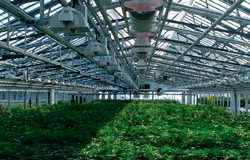
    Greenhouses and other indoor grow rooms provide a structure for growing plants in a controlled environment but can also pose potential hazards to human health. To create favourable growing conditions, reliable heating, cooling and ventilation must be used. Heating may be supplied by sunlight, natural gas, propane gas, fuel oil, wood or electricity. Gas powered equipment may be a source of carbon monoxide if not properly maintained and serviced. Grow lights emit a great deal of heat and can cause combustible gases to ignite. Cooling of the facility is often done by a ventilation system. But there may also be an air conditioning system, which could be a source for refrigerant leaks. Current practices for the commercial cultivation of marijuana and industrial hemp uses Carbon dioxide (CO2) enrichment to increase plant growth and development either using cylinders of liquefied compressed gas or a CO2 generator. CO2 displaces oxygen and can cause an asphyxiation hazard. TYPICAL INDOOR GROW OP MONITORING SYSTEMTwo gas detectors should be mounted inside the furnace room - one for monitoring potential leaks in the pipes supplying the gas to the furnace, and the other monitoring carbon monoxide levels generated by the furnace. A well maintained, efficiently burning furnace produces very small amounts of CO, but a dirty, inefficient burning one can product deadly amounts.

    To monitor the CO levels, an CGAS-D-CO-R should be mounted inside the furnace room at the "breathing zone" (4 -6 ft from the floor). Connected the the CGAS-D-CO-R would be a remote sensor. If the furnace uses propane, an ESH-A-C3H8-100 remote sensor with an internal propane sensor would be used, mounted 6 inches off the finished floor, close to the pipes suppling the gas to the furnace. If the furnace uses natural gas, an ESH-A-CCH4-100 remote sensor with an internal methane sensor should be used instead, mounted 6 inches from the ceiling above the pipes supplying the gas. Inside the room, should be an audible/visual alarm device such as the RSH-24V-R Remote Strobe/Horn. Mounted outside the door of the furnace room would be a FCS 4 Channel Controller. If there are additional entrances to the room, each should have a remote visual/audible alarm device outside the door. Inside the grow room there should be a CGAS-D-CO2-5K carbon dioxide gas detector mounted in the "breathing zone" (4 - 6 ft from the floor) to provide continuous monitoring of CO2 levels.

    This is especially important if a CO2 enrichment practice is used. The CGAS-D-CO2-5K is factory set with a range of 0 - 5,000 ppm and one device covers approximately 743 sq m (8,000 sq ft). Both gas detectors will communicate with FCS Controller, which in turn will display their gas level readings, and in the event of a leak / high gas concentration, will provide an audible alarm and control equipment such as the ventilation system, shut off the furnace, trigger the other remote horn/strobe devices or other set responses as configured using its 4 internal relays. The FCS Controller has data logging capabilities and it can be configured to communicate with a Building Automation System. The gas detectors/sensors are housed in water/dust tight enclosures, and are IP54 rated with the factory installed splash guard, providing protection for the equipment in wet areas.About Critical Environment Technologies Canada Inc. Critical Environment Technologies Canada Inc. is a leading equipment manufacturer for commercial and industrial gas detection applications. We are dedicated to designing, developing and servicing hazardous gas detection systems for a wide range of applications that require monitoring of refrigerants, TVOCs, combustible and toxic gases. CETCI's products are sold through a worldwide network of authorized distributors. Our knowledgeable Regional Sales Managers are experienced with many application scenarios, including commercial, institutional, municipal and light industrial markets worldwide. Areas of specialization include car parks, refrigeration plants, commercial swimming pools, water purification, including wastewater treatment facilities, ice arenas, wineries and breweries, schools and many more.

    For suggestions on gas detection systems, indoor air quality monitors and calibration, please visit www.critical-environment.com.