
Understanding A2L Refrigerants: Safety, Standards and Detection
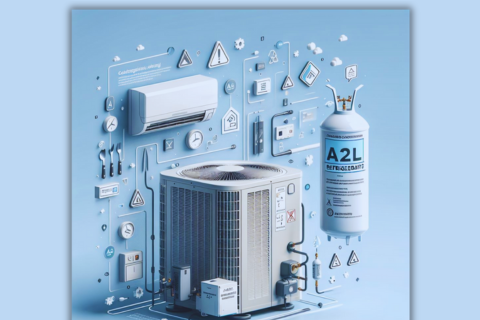
A2L refrigerants offer a safer and more environmentally friendly alternative to traditional refrigerants, but they require careful handling and specific safety standards to mitigate potential hazards.
A2L refrigerants are gaining attention in the HVAC industry due to their unique characteristics and benefits. These refrigerants are known for their low flammability, reduced toxicity, and lower Global Warming Potential (GWP) compared to traditional refrigerants. However, despite their lower flammability, A2L refrigerants can still pose fire hazards if they leak and accumulate in sufficient concentrations. Additionally, asphyxiation risks arise as these gases displace oxygen, and direct contact can cause cryogenic burns.
ASHRAE 15-2024 Code Requirements for Gas Detection Systems
To accommodate the use of A2L refrigerants, recent updates have been made to the ASHRAE Standard 15. These updates include specific code requirements and location requirements for gas detection systems.
Low-Range Detectors:
- Require one fixed alarm setpoint at or lower than the Occupational Exposure Limit (OEL).
High-Range Detectors:
- Require one fixed alarm setpoint at or lower than 25% of the Lower Flammability Limit (LFL), also known as the Refrigerant Concentration Limit (RCL) or Lower Explosive Limit (LEL). The alarm setpoint varies depending on the specific A2L refrigerant.
- Alarm setpoints must be nonadjustable in the field.
Sequence of Operation:
- Within 15 seconds of a detector signal, the gas detection system must energize fans, open dampers, activate mechanical ventilation and safety shutoff valves, and de-energize electrical equipment and potential ignition sources. These actions must be maintained for at least 5 minutes after the output signal has reset.
Location Requirements for Detectors
Low-Range Detectors:
- Designed to monitor for leaks that approach toxicity levels in occupied spaces such as walk-in coolers, freezers, and mechanical rooms with HVAC equipment. These detectors help maintain refrigerant concentrations below the 8-hour Time-Weighted Average (TWA) OEL levels.
High-Range Detectors:
- Used to monitor locations like shafts, branch selector boxes, and other areas where large amounts of refrigerant may pass through.
- In case of a leak, these detectors can quickly identify high concentrations of refrigerant.
Integration of High-Range A2L Refrigerant Sensors
Original Equipment Manufacturers (OEMs) are now integrating high-range A2L refrigerant sensors directly into refrigeration equipment at multiple detection points along the refrigerant circuit, from the compressor to the condensing unit to the case itself. These integrated gas detection systems are required in A2L refrigerant systems containing more than 4 pounds of refrigerant. The sensors must create an alarm condition and initiate mitigation protocols if refrigerant concentration approaches 25% of the LFL at any point in the circuit. Since these sensors are not triggered by small, gradually accumulating leaks, low-range detectors remain necessary to monitor for slow leaks.
Conclusion
While the applications of OEL and LFL differ, both should be incorporated into equipment design and building management controls to safeguard people and structures. By understanding and implementing these standards and detection systems, we can ensure the safe and efficient use of A2L refrigerants in various settings. pdf version
If you like to learn more about A2L refrigerant standards, applications and gas detection requirements contact us for more information on attending CET's A2L Refrigerant Monitoring Course.