
Navigating the Hazardous Gases in Breweries
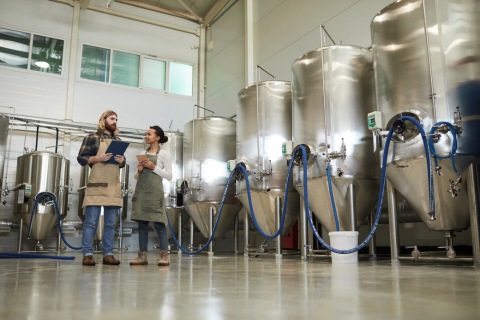
When considering the hazardous gases in a brewery, CO2 is likely the first to come to mind. While it plays a crucial role in brewing, other gases like ammonia, nitrogen, and ozone can also be present.
Carbon dioxide (CO2) is naturally produced during the fermentation process and is also used for carbonation and purging. It may also be found in recovery, purification and liquefaction machinery, which can also fail or leak. Being colorless, odorless and heavier than air, CO2 can accumulate to dangerous levels in low lying areas of the fermentation rooms, tanks, pits, kegs, cellars and crawlspaces. If the CO2 was left to build up it would displace the oxygen in the area, creating a suffocation hazard for workers. CO2 gas detectors should be installed 12" from the floor wherever CO2 is being used and stored. Ammonia (NH3), a toxic and highly reactive and corrosive gas is frequently used in the refrigeration system and a leak or release could pose a serious threat to workers. Ammonia gas detectors should be placed above or near potential leak sources in the engine room and bottling areas. Additional ammonia gas detectors are often required for redundancy and to monitor for leaks from ammonia vent lines and condensing units as well. Nitrogen (NO) is often used for purging tanks and preventing oxidation. It is also used to create nitro beers and for dispensing beverages. The gas cylinders are often stored in enclosed cellars or cool rooms. Nitrogen, like CO2 is odorless and colorless, making it undetectable without proper equipment; and it displaces oxygen, creating asphyxiation hazards. Oxygen gas detectors are crucial for monitoring potential buildup and leaks in areas where nitrogen is being used or stored. Many brewers include an oxygen deficiency monitor in areas frequently occupied by personnel. Ozone (O3) or Chlorine (Cl2) may be used for process equipment sanitation and treatment purposes. Cylinders or tanks are often stored in storage rooms and at generation and injection sites. Ozone may also be used as a disinfectant in the bottling area. An ozone or chlorine gas detector should be installed near the floor to monitor for any leaks at the storage, generation and injection points. Detecting these hazardous gases is the first line of defense in ensuring a safe working environment. There are two main types of gas detection systems used in breweries — fixed and portable.
- Fixed gas detectors are permanently installed in strategic locations, providing continuous, real-time monitoring of the air for specific gas types and concentrations. When a pre-set threshold is reached, alarms trigger, alerting workers to take immediate action, such as increasing ventilation or evacuating the area.
- Portable gas detectors are handheld devices that are used for spot checks, pre-entry checks before entering confined spaces and while inside confined spaces. These personal monitors are often capable of monitoring multiple types of gases and ensure work safety during maintenance procedures. Implementing a combination of fixed and portable gas detection systems helps ensure comprehensive monitoring and safety compliance in breweries. Remote strobes and horns are essential safety devices that provide both visual and audible alerts to workers. These devices are activated by gas detectors when gas levels exceed a preset threshold. For optimal effectiveness, remote strobes and horns should be installed at visible heights both inside and outside enclosed spaces, as well as in other key areas. This ensures that warnings are clearly communicated, allowing for timely mitigating actions. The gas detection system is integrated with the ventilation system to enhance safety measures. When a gas detector senses gas levels exceeding the preset threshold, it triggers the ventilation system to take action. This includes activating fans to increase air circulation, opening doors to allow gas to escape, and engaging other equipment designed to exhaust the area. These automated responses help to quickly reduce gas concentration, ensuring a safer environment for workers. A gas detection system is not only important for the safety of workers and patrons but is also a regulatory requirement — always make sure to follow local, State and Federal regulations.