Critical Environment Technologies
    April 17, 2023

    Carbon Dioxide Monitoring
    Carbon Dioxide Monitoring

    CO2 is naturally occurring all around us and in low concentrations it is not the least harmful. However, CO2 has the potential to exist in unhealthy concentrations in a multitude of applications which

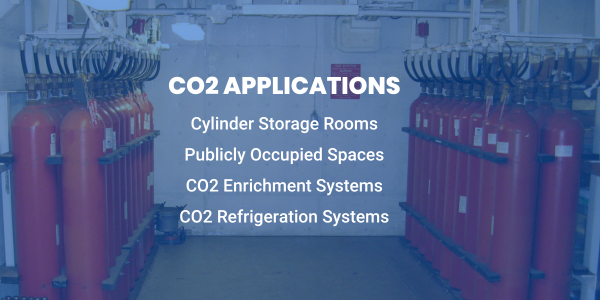
    Carbon dioxide (CO2) is the fourth most abundant gas in the atmosphere. It is naturally occurring, humans exhale it, it can be created, stored and it is used in its gas or dry ice forms in many types of applications. At 40,000 ppm (4% vol), CO2 is life threatening. The threat doesn't come by breathing it in. CO2 is heavier than air and will accumulate in low lying areas. If the gas is left to build up, it will push the oxygen higher and higher displacing it, creating an asphyxiation hazard that can cause unconsciousness or death by suffocation. Outdoor air has a concentration of around 400 ppm (0.04% vol) but can be much higher in cities with lots of traffic, factories and industrial plants. Concentrations that affect the indoor air quality in offices, schools, arenas and other publicly occupied spaces fluctuate based on the number of people inside the building and the adequacy of the ventilation system. For human occupancy in areas where CO2 is generated mainly by human exhalation, ASHRAE (American Society of Heating, Refrigerating and Air-Conditioning Engineers) recommends the CO2 level in buildings should be no more than 700 ppm above outdoor air. Since outdoor air is approximately 400 ppm that means the indoor CO2 levels should be no more than 1,100 ppm. CO2 gas detectors for publicly occupied spaces should be mounted in the breathing zone 4 — 6 ft / 1.2 — 1.8 m from the floor. The gas detection system and the ventilation system work together to maintain an acceptable indoor air quality level for comfort and productivity. Medical facilities, breweries, restaurants and bars, welding shops and chilling/packaging plants use and store cylinders or tanks of CO2 that are highly pressurized. CO2 storage areas are typically an enclosed space and not frequented regularly. Inside the room, a CO2 gas detector should be mounted 6 in / 15.24 cm from the floor, close to where a possible leak could occur. Each entrance to the room needs a visual warning device. For workplace personal life and safety monitoring, OSHA (Occupational Safety and Health Administration) Permissible Exposure Limit (PEL) and the ACGIH (American Conference of Governmental Industrial Hygienists) Threshold Limit Value (TLV) for 8-hour exposure is 5000 ppm (0.5% vol) and the short-term exposure limit (15-minute exposure) is 30,000 ppm (3% vol). For CO2 storage vessels, the NBIC (National Board Inspection Code) specifies a low alarm level of 15,000 ppm (1.5% vol) and a high alarm level of 30,000 ppm (3.0% vol). Indoor growers/cultivators, ripening rooms and swine and poultry euthanasia facilities use large, controlled releases of CO2 in enclosed areas that are not occupied by humans until the concentration of gas returns to a safe level. For general health and safety monitoring (not for life safety monitoring) the low-level alarm setting recommendation is 15,000 ppm (1.5% vol) and a high-level alarm at 30,000 ppm (3% vol). It is becoming more common for applications that use very high concentrations of CO2 to also have a personal exposure gas detection system; some additionally requiring an oxygen monitor to satisfy the Life Safety Code set out by NFPA (National Fire Protection Association). With the increasing demand for more natural refrigerants in commercial refrigeration systems, CO2 refrigeration systems are becoming more common. The non-flammable, low ozone depleting potential properties and lower cost of use is attractive and economical. Monitoring of CO2 in walk-in coolers, freezers, commercial refrigerators and other refrigeration systems should be done where CO2 leaks could occur. OSHA specifies alarm levels of 5,000 ppm (TWA), 15,000 ppm (1.5% vol) and 30,000 ppm (3.0% vol). CET offers CO2 gas detectors for indoor air quality and for life, health and safety applications with various ranges, units of measure and three alarm levels that are fully programmable in the field. DOWNLOADS ****Types of CO2 Applications ****CO2 Exposure Limits by Regulatory Authority