Calibration Could Save Your Life

Many gases—some detectable by humans, others not—can leak into the spaces where we work and play, becoming dangerous when they exceed safe concentrations.

Luckily, there are gas detectors and indoor air quality systems to detect and alert us when levels become undesirable and potentially lethal. But what good are these systems if their readings are unreliable or inaccurate and alarms aren't going off when they should be? It isn't uncommon for detectors to be installed and never serviced again, even though government regulations such as Occupational Health and Safety Guidelines and many companies' operation and safety manuals state they should be serviced on a regular basis.
A gas detector is a safety device. A properly functioning gas detector could be the difference between life and death. Making sure such a device is working properly on a regular basis should, without question, be a part of a scheduled maintenance program. The calibration frequency really depends on the type of system and how it's being used. For example, portables should be calibrated more frequently because they are used in changing environments. Fixed systems may be calibrated every 6-12 months depending on application, standards and local regulations. However, a calibration should always be done immediately following a failed bump test. Bump Testing involves flowing a sample of target gas over the sensor in question and checking that the response is strong enough to confirm response and activate an alarm condition. CET recommends regular bump testing depending on application, standards and local regulations. It is good practice to check the gas sensor more closely (every week) during the first 30 days after installation to ensure it is performing as expected and adapting to its new environment.
Any problems such as inappropriate location, interference from other gases or issues with sensitivity can then be corrected and your expectation in its performance can be set with confidence. Wear and tear on a device may also affect its performance and reliability. Therefore, it is important to inspect fixed and portable gas detectors and air quality monitors for accidental or deliberate damage on a regular basis. Check the housing for cracks, water damage, loose screws and wires, and make sure the filter is clean (if applicable). The procedure for calibrating the sensors should be simple, repeatable and economical:
- Establish a preventative maintenance schedule and stick to it — whether you do the work in house or hire a reputable technician
- Follow the manufacturer's instructions on how to properly calibrate your detectors
- Make sure you use the proper calibration adapter that will allow the gas to properly diffuse around the sensor
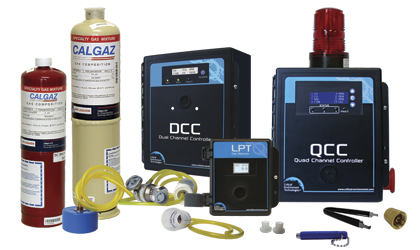
- Make life easier by buying a calibration kit so you have all the tools you need on hand in a convenient carrying case
- Choose from a wide selection of calibrating gases, including Zero Air
Calibration is important because it safeguards against unreliable results; it ensures the sensors are accurately measuring to OSHA provincial and State standards and will correctly alert humans of an unsafe environment of toxic or combustible gas buildup. If calibration is not already an element of your business, perhaps it should be. It could save your life!