Critical Environment Technologies
    October 21, 2025

    Best Practices for Gas Detection and Safety Compliance in Chiller Rooms
    Best Practices for Gas Detection and Safety Compliance in Chiller Rooms

    A gas detection system in a chiller room is not just a precaution"”it's a critical safety measure.

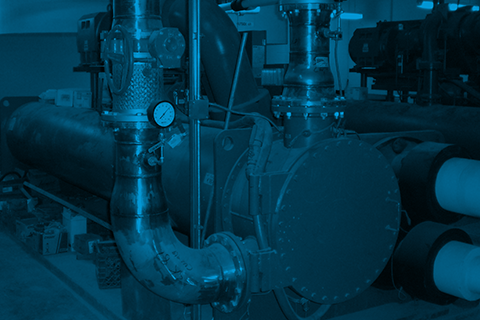
    Chiller rooms are essential to the operation of commercial and institutional buildings, providing the cooling power behind air conditioning systems in hotels, offices, supermarkets, and more. However, these rooms also pose serious safety risks due to the potential release of hazardous gases. Typically located out of sight, chiller rooms contain equipment that produces chilled water using refrigerants or ammonia to transfer heat. While effective, these substances can be dangerous if leaked—displacing oxygen, causing toxic exposure, or even creating fire hazards depending on the refrigerant type. Early detection of leaks is crucial to protect occupants, reduce refrigerant loss, and avoid increased energy costs. To ensure safety and regulatory compliance, implementing a gas detection system is vital.

    Critical Environment Technologies' FCS Flexible Control System paired with cGas Detector Digital Transmitters offers a reliable solution.

    KEY INSTALLATION GUIDES FOR REFRIGERANT DETECTION

    Gas Detector Placement: Install CGAS-D-IR transmitters with internal infrared sensors in areas where refrigerant leaks are most likely to concentrate—typically near the floor and in low-airflow zones. Mount detectors 10" to 18" above the floor for optimal detection and easy maintenance. Each chiller should have its own dedicated refrigerant detector. UPDATES to CSA B52 (released April 2025):

    • Minimum of two refrigerant detectors inside chiller mechanical rooms
    • Groups A2, A3, B2, and B3 (i.e. not A2L or B2L) require Zone 2 classified transmitters (explosion proof)

    Controller Location: The FCS Controller should be mounted outside the mechanical room at eye level. Equipped with a top-mounted strobe and manual shut-off switch, it provides visual confirmation of gas levels before entry and allows emergency shutdown of chiller equipment.

    Alarm and Response System: If refrigerant levels exceed preset thresholds, the CGAS-D-IR triggers an alarm and sends a signal to the FCS. This activates audible alarms, mechanical ventilation, equipment shutdown, and emergency response protocols. This setup ensures compliance with standards such as ASHRAE 15 and CSA B52.

    System Features - the FCS system is pre-programmed and field-adjustable, offering:

    • Four dry contact relays
    • Priority settings
    • Time-of-day logic
    • Data logging
    • Audible alarm
    • Full-color touchscreen interface
    • It supports Modbus® RS-485 communication and optional 4—20 mA outputs. Integration with building automation systems is available via BACnet® MS/TP or Modbus®.

    Scalability: The FCS Flexible Control System is available in 4, 8, 32, or 64 channels. For mechanical rooms with a single chiller, the cGas-SC Self Contained Controller can be used with an cGas Detector Analog Transmitter.

    Additional Safety Devices: Install remote visual and audible alarms like the RSH-24V-R Remote Strobe & Horn inside the room. For rooms with multiple entrances, use RDM Remote Display Module with a side mounted strobe outside each door to provide visual gas level confirmation before entry. An RSW-E Remote Switch should be installed outside the door for manual shutdown of equipment in an emergency.

    **KEY INSTALLATION GUIDES FOR AMMONIA DETECTION **

    When ammonia (NH3) is used instead of refrigerants, the system configuration remains largely unchanged—except a cGas Detector equipped with an ammonia sensor is used. The CGAS-D-NH3 should be installed above the chiller, positioned as close as possible to potential leak points and near the ceiling. Since ammonia is lighter than air, it tends to rise and accumulate at ceiling level, making high placement critical for effective detection. Each chiller should have its own dedicated ammonia detector. A gas detection system in a chiller room isn't just a precaution—it's a critical safety measure. Proper installation and use of advanced detection technologies help protect personnel, ensure regulatory compliance, and prevent environmental harm from refrigerant leaks.