Critical Environment Technologies
    November 14, 2017

    A Few Facts About Ammonia
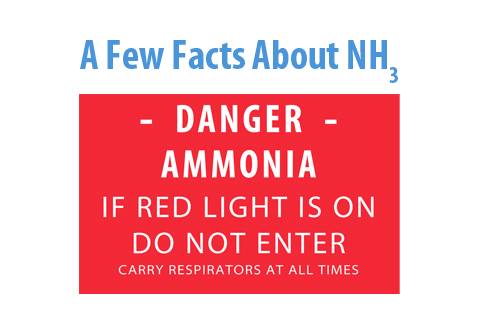
    A Few Facts About Ammonia

    Classification Inorganic, toxic gas Molecular Formula NH3 or H3N Molecular Weight 17.031 g/mol Fire Hazard Rating Slight to moderate, on its own The presence of oil or other combustible materials incr

    ClassificationInorganic, toxic gasMolecular FormulaNH3 or H3NMolecular Weight17.031 g/molFire Hazard Rating Slight to moderate, on its own

    • The presence of oil or other combustible materials increases ammonia's fire hazardExplosion Range When mixed with air, it is explosive at concentrations of 16% - 27% (by volume)
    • Is extremely reactive and if it comes into contact with strong oxidizers such as chlorine, bromine, iodine, calcium, gold, mercury, silver, and hypochlorite bleaches it will easily combine and form explosive mixturesLiquid Ammonia


    Ammonia Gas


    Moist Ammonia


    ** ** Clear fluid

    • Evapourates quickly at room temperature
    • Has a high compression ratio (when exposed to air, 1 L of liquid ammonia expands to form 800 L of gas)
    • Colourless, alkaline
    • Has a pungent, penetrating odour
    • Is very irritating to the eyes, nose and respiratory system (however, regular exposure could cause a resistance to the smell)
    • Is lighter than air (will collect in high areas, at the ceiling)
    • Is easily liquified under pressure
    • Ammonia can cause chemical burns all over the body Ammonia vapour reacts with moisture in the air causing a corrosive moist ammonia to form which attacks copper zinc, tin, cadmium, and most of their alloys and will also corrode many rubbers and plasticsToxic Effects of Ammonia *NOTE: Long-term exposure to ammonia **will not help you develop a tolerance to it; *it will only weaken your ability to detect it. 2 - 55 ppm Normal range of odour threshold 70 ppm Stinging or burning in eyes, nose, or throat; can cause watering of eyes, sneezing, and coughing 300 ppm Severe irritation of eyes, nose, or respiratory tract, which becomes intolerable after a few minutes; difficulty breathing; possible burning in lungs (IDLH level) 2000 ppm or more Can be fatal after a few breaths Exposure Limits of Ammonia25 ppm Maximum allowable concentration averaged over an eight-hour period 35 ppm Maximum allowable short-term exposure (15 minutes) 300 ppm Immediately dangerous to life and health (IDLH)Potential Causes of Leaks Pipe failure due to vibration or mechanical damage
    • Pipe failure due to electrolytic corrosion between dissimilar metals
    • Valve failure due to impurities lodging in valves
    • Compressor failure due to non-compressible liquids in the compressor suction
    • Faulty valves allowing higher than normal operating pressureMachine and Storage Rooms *NOTE: This is a general guideline.

    Follow your appropriate codes/standards/ regulations to *ensure proper compliance.

    • Room must be sealed off from the rest of the building, ideally located in a detached building or a cutoff room that has one or more doors that lead directly outside
    • Doors should be self-closing (not self locking), tight fitting, with a crash bar, and open outwards for easy exit
    • No other materials, combustible or otherwise, should be stored in the same room
    • Emergency shutdown controls must be located outside the room
    • All electrical installations must be explosion-proof
    • Vent relief panels should be installed according to local codes
    • Separate ventilation systems with fresh air intakes at floor level and exhaust devices at ceiling level Protection Continuous ammonia detection and alarm system for early detection
    • Accessible shutoff valves
    • Automatic shutoff valves triggered by liquid-level gauges
    • Personal protective equipment
    • Automatic sprinkler system
    • All piping should be protected against mechanical damage
    • Methods available to dilute and disperse ammonia leaks**Emergency Response Planning
    • Steps to address an ammonia leak** Provide training, instruction and supervision
    • Write down safe work procedures
    • Identify the valves that control the ammonia flow
    • Understand ventilation systems, dispersion and diluting procedure
    • Initiate product recovery/damage control plans
    • Have a diagram with the locations of all valves and hazardous components
    • Have breathing apparatus and protective clothing close by
    • Involve the fire department in pre-fire planning
    • Have emergency and evacuation procedures written down
    • Arrange inspection and maintenance of the ammonia equipmentAmmonia Gas Detection System 24 hour continuous monitoring with an alarm response if ammonia concentrations reach a certain preset level (at or below 35 ppm)
    • Alarm must be able to be heard and seen by all workers
    • Must have direct readout of the current gas level that can be seen from outside the room
    • System should be able to trigger the exhaust ventilation system automatically pdf version This document is for informational purposes only. No duty or undertaking is intended or assumed by CETCI. Every site is different and should develop and implement a health and safety program unique to their own operation. Always follow local, provincial and federal codes and regulations. If in doubt, contact appropriate authorities.